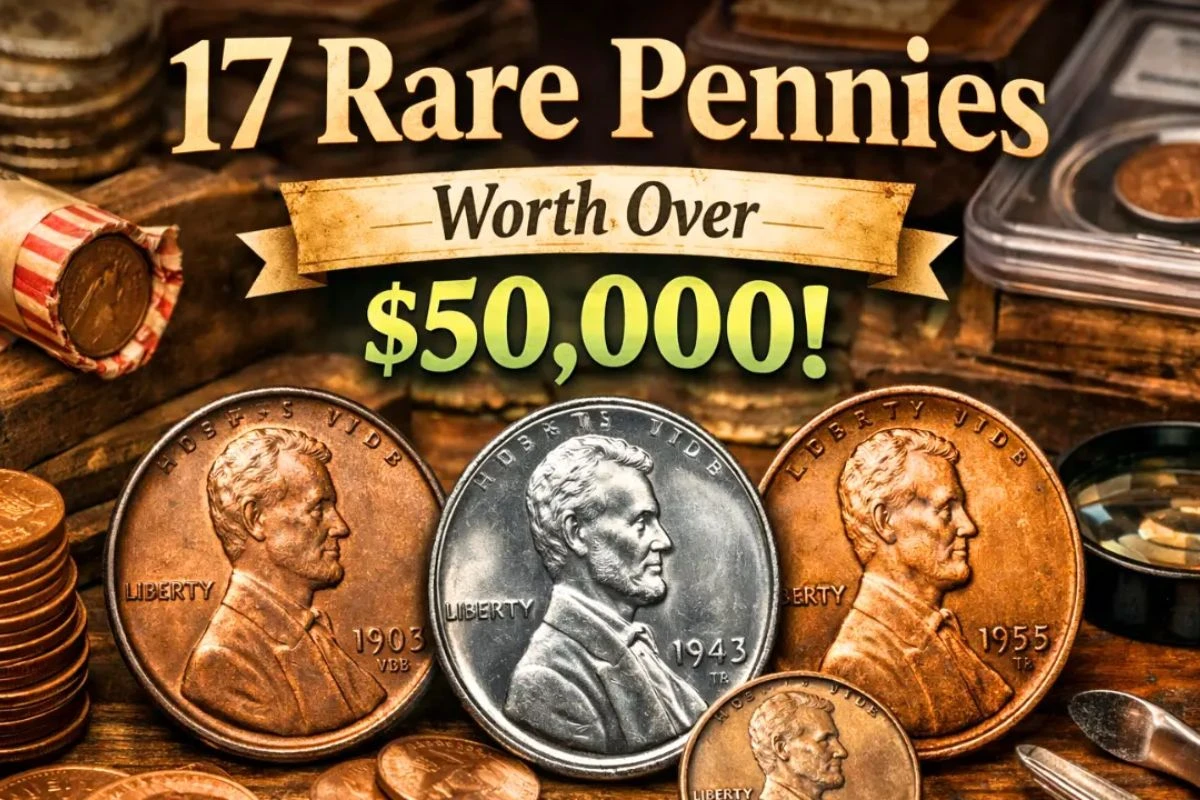
Collecting rare pennies (coins) has become one of the most exciting hobbies in America, with certain coins fetching astronomical prices at auctions. While most pennies are worth merely a single cent, a select few have become incredibly valuable due to minting errors, limited production runs, or unique historical significance. These rare pennies can transform an ordinary coin collection into a substantial fortune, with some specimens selling for upwards of $50,000.
The world of rare penny collecting appeals to both seasoned numismatists and everyday Americans alike—those who dream of discovering a hidden treasure within the loose change in their pockets. To identify which pennies possess extraordinary value, one must possess knowledge of specific years, mint marks, and distinct characteristics that set them apart from the billions of standard cents produced by the United States Mint.
Understanding Penny Values
The value of a rare penny hinges on several key factors that collectors and experts consider during the authentication and appraisal process. Condition plays a pivotal role, as coins in pristine (mint state) or uncirculated condition command significantly higher prices than those that are worn or heavily circulated. Rarity is equally important; coins produced in limited quantities or those containing manufacturing errors are highly coveted by collectors.
Provenance and historical context also contribute to a penny’s value. Coins with a documented ownership history—or those linked to significant historical events—often fetch premium prices at major auction houses. Grading systems employed by professional services such as PCGS and NGC provide standardized evaluations, wherein a higher grade directly translates to a higher market value.
The 1943 Copper Penny
The 1943 copper penny stands as one of the most renowned and valuable minting errors in American history. During World War II, the U.S. Mint began producing steel pennies to conserve copper for military purposes; however, a few copper blanks (uncut coin discs) were accidentally mixed into the production run. These error coins have fetched over $200,000 at auction, and certified specimens are extremely rare.
Today, only 40 such copper pennies are known to exist. Their unique composition and fascinating wartime history make them the “Holy Grail” for many collectors seeking to add extraordinary pieces to their collections.
The 1944 Steel Penny
The 1944 steel penny represents an error converse to that of its 1943 counterpart. When the Mint resumed copper coin production after the war, a few leftover steel planchets from 1943 were accidentally struck with the 1944 die. These “transitional errors” are extremely rare and valuable.
Collectors have paid between $75,000 and $110,000 for these authentic specimens. The discrepancy between the coin that should have been produced and the one that actually was creates an intense desirability for these coins among serious numismatists.

The 1909-S VDB Penny
The 1909-S VDB penny features the initials of its designer, Victor David Brenner, prominently stamped on its reverse side. A public controversy regarding the size of these initials led to their swift removal, resulting in a very limited production run at the San Francisco Mint. Only 484,000 coins were minted before the design was altered. High-grade specimens often fetch prices exceeding $50,000 at auction. This combination of low mintage figures and historical significance makes this penny a cornerstone of ‘Lincoln Cent’ collections.
1914-D Penny
The 1914-D penny, issued by the Denver Mint, is renowned for its extremely low mintage—only 1,193,000 coins were struck. Due to this rarity, it has become one of the key dates in the ‘Lincoln Cent’ series—a coin that collectors simply must acquire to complete their sets.
Uncirculated examples command prices well in excess of $60,000. The challenge of locating such specimens in pristine condition sparks intense bidding wars among wealthy collectors.
1922 No D Penny
The 1922 ‘No D’ penny was produced at the Denver Mint due to a defective die. All pennies minted that year were supposed to originate from Denver; however, a worn-out die resulted in the production of pennies on which the mint mark was invisible. This error occurred because maintenance issues prevented the die from being properly replaced.
High-quality examples of this penny sell for prices ranging between $50,000 and $80,000, depending on their specific grade. The absence of the mint mark—combined with the coin’s overall condition—ultimately determines its final market value.
1955 Doubled Die Penny
On the obverse side of the 1955 ‘Doubled Die’ penny, a distinct doubling is clearly visible in both the date and the lettering. This unique error occurred during the ‘hubbing’ process and gave rise to one of the most visually striking errors in the history of U.S. coinage. This doubling is discernible even to the naked eye, making it relatively easy to authenticate the coin.
Specimens in the highest grades have fetched prices of up to $125,000 at major auctions. Its impressive appearance and the clearly visible error make this penny highly sought after by both serious numismatists and casual enthusiasts alike.

1969-S Doubled Die Penny
The 1969-S ‘doubled die’ penny is considered extremely rare, with fewer than 100 known examples currently in existence. The doubling is most pronounced in the date and the word “LIBERTY,” giving the coin a distinctive appearance that experts can easily identify. Occasionally, new examples of this coin are discovered, generating significant excitement within the coin-collecting community. Specimens in exceptional condition have sold for prices exceeding $150,000. The combination of its extreme rarity and its unique visual error creates intense competition among collectors whenever a specimen appears at auction.
Lincoln Cent Rarities
Several other coins in the Lincoln cent series also command very high prices due to their specific characteristics. The 1931-S penny—which had a total mintage of only 866,000 pieces—often sells for over $50,000 if found in “gem” (mint) condition. The 1924-D is also considered a valuable coin due to its low mintage and high demand among collectors.
Occasionally, “transitional errors” and “off-metal strikes” also appear on the market. These unique coins result from minting errors and present an excellent opportunity for collectors looking to add truly unique items to their collections.
Indian Head Pennies
Certain “Indian Head pennies” minted prior to the Lincoln Cent series can also fetch prices exceeding $50,000. The 1877 Indian Head penny—which boasts the lowest mintage in the entire series, with only 852,500 pieces produced—is considered a “key date” (a pivotal coin) within the series. High-quality, uncirculated specimens can reach six-figure values due to their extreme rarity.
The 1909-S Indian Head penny, produced during the final year of the series’ production run, also commands a significantly high price. Collectors aiming to assemble complete sets of coins maintain a consistent demand for these rare pre-Lincoln era issues.
Certification and Grading
For rare penny coins valued at over $50,000, obtaining professional certification from organizations such as PCGS, NGC, or ANACS is absolutely essential. These third-party grading services provide expert evaluations of coins, encapsulate them in secure holders, and guarantee their authenticity. Since counterfeit copies of rare penny coins do exist in the market, professional verification is crucial before making any significant purchases.
The grading scale ranges from ‘Poor-1’ to ‘Perfect Mint State 70’. In the case of the rarest penny coins, even a slight difference in grade can result in a price differential of thousands of dollars.

Market Trend Analysis
| Penny Type | Estimated Price Range | Known Examples | Highest Price at Recent Auction |
|---|---|---|---|
| 1943 Copper | $100,000–$200,000 | ~40 | $204,000 |
| 1944 Steel | $75,000–$110,000 | ~30 | $108,000 |
| 1909-S VDB | $50,000–$100,000 | 484,000 Minted | $96,000 |
| 1955 Doubled Die | $60,000–$125,000 | ~20,000 | $114,000 |
| 1969-S Doubled Die | $80,000–$150,000 | <100 | $126,500 |
Investment Considerations
Rare pennies have demonstrated strong appreciation in value over decades; as the available supply diminishes, the value of many specimens continues to rise. Estate sales and the dispersal of collections occasionally introduce new material into the market, yet the total supply of high-grade rarities is steadily shrinking. Wealthy collectors compete vigorously for the finest specimens, driving prices upward at major auctions.
Market liquidity varies depending on the specific date and grade. The most famous error coins and key-date issues tend to sell quickly, whereas finding suitable buyers willing to pay premium prices for lesser-known rarities may require patience.
Preservation and Storage
Proper storage is paramount to maintaining and safeguarding the value of rare pennies. Professional collectors employ inert holders, controlled environments, and meticulous handling procedures to protect coins from deterioration. Exposure to moisture, chemicals, or improper cleaning can permanently damage coins and result in a significant loss of value.
For collections containing pennies valued at over $50,000, insurance coverage and secure storage become essential. Many serious collectors maintain relationships with specialized insurers who understand the specific values and risks associated with numismatics (coin collecting).
Finding Rare Pennies
Although most valuable pennies reside within established collections, new discoveries continue to be made through estate cleanouts, bank rolls, and inherited collections. Metal detecting, attending coin shows, and networking with other collectors can sometimes lead to unexpected finds. The possibility of unearthing hidden treasures keeps this hobby exciting for participants at every level.
Online marketplaces and auction platforms have made accessing rare coins even easier. However, to avoid counterfeits and overpriced coins, buyers should exercise caution and seek expert advice before making significant purchases.