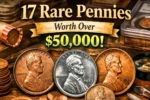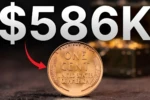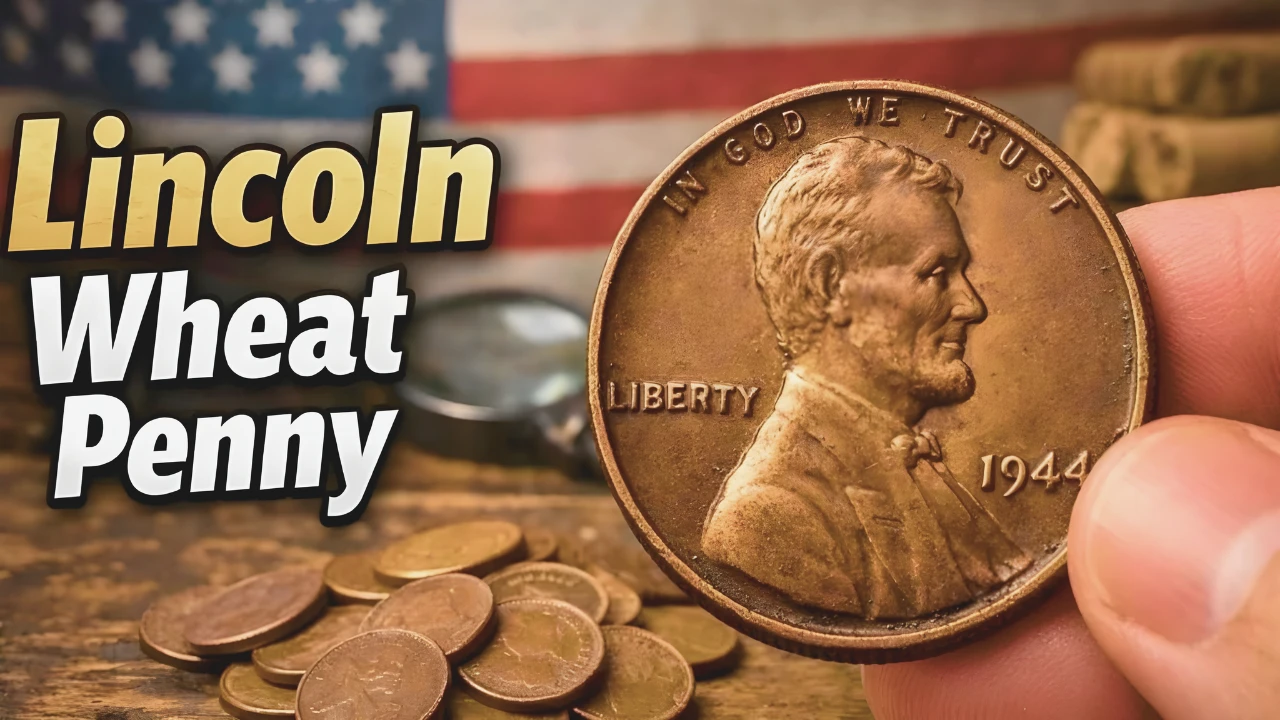
Rare Lincoln Wheat penny coins are among the most sought-after treasures in American numismatics. Minted between 1909 and 1958, these small copper coins hold significant historical importance, and their value—depending on their condition and rarity—can reach into the thousands of dollars. Across America, collectors spend years sifting through pocket change and coin rolls in the hope of stumbling upon one of these precious pennies that could transform their financial fortunes overnight.
Historical Background
The Lincoln Wheat Penny was first introduced in 1909 to commemorate the 100th anniversary of Abraham Lincoln’s birth. This marked the first time that the likeness of a real person appeared on a regularly circulating U.S. coin; prior to this, American coinage had been dominated exclusively by allegorical figures.
The coin’s reverse side featured two stalks of wheat, giving it the name “Wheat Penny”—a moniker still used by collectors today. Designed by sculptor Victor David Brenner, these coins were minted for nearly five decades before being replaced in 1959 by the Lincoln Memorial design.
The Most Valuable Edition
Among collectors, the 1909-S VDB penny is considered the most famous and rare of all Lincoln wheat pennies. Only 484,000 of these coins were minted at the San Francisco Mint; production was subsequently halted due to public outcry regarding Brenner’s prominent initials, which ultimately had to be removed from the coinage.
If found in pristine (flawless) condition, a 1909-S VDB penny can fetch anywhere from $100,000 to $150,000 at auction. Even if the coin is quite worn, it typically fetches between $700 and $1,500; for this reason, it is nothing short of a “holy grail” for penny collectors across the country.
Serious Minting Errors
The 1943 copper penny is considered one of the most valuable minting errors in American history. During World War II, in an effort to conserve copper for the war effort, it was decided that penny coins would be struck using zinc-coated steel.

However, a few copper coin blanks (planchets) minted in 1942 were accidentally left behind in the machinery and were subsequently struck using the 1943 dies. It is believed that only 20 to 40 genuine examples of this coin exist, some of which have sold for over $1 million at major auctions.
Condition Assessment is crucial.
The value of any rare Lincoln Wheat penny depends heavily on its condition, which numismatists assess on a scale ranging from “poor” to “excellent.” A coin graded MS-65 or higher can be hundreds of times more valuable than an identical coin that has been in circulation.
Professional grading services such as PCGS and NGC authenticate and grade these pennies, sealing them in protective holders that bear an official grade designation. Serious collectors purchase only professionally certified, high-value coins to avoid counterfeits.
Key Date Analysis
| Year | Mint Mark | Mintage | Estimated Value (Good) | Estimated Value (Uncirculated) |
|---|---|---|---|---|
| 1909-S VDB | S | 484,000 | $700 | $100,000+ |
| 1914-D | D | 1,193,000 | $200 | $6,000 |
| 1922 Plain | None | Unknown | $600 | $20,000 |
| 1931-S | S | 866,000 | $75 | $300 |
| 1943 Copper | Various | ~40 known | $100,000 | $1,000,000+ |
The 1922 Plain Mystery
The 1922 “Plain” Penny is another fascinating and rare Lincoln Wheat Penny that commands a significant price. This coin was produced at the Denver Mint due to a worn die, which prevented the “D” mint mark from being properly struck.
A unique feature of this coin is that no pennies were officially minted in Philadelphia that year; consequently, the absence of a mint mark on this particular coin is both unusual and highly valuable. Collectors are willing to pay a premium for examples where the absence of the mint mark is clearly evident.

Double-Die Varieties
Double die errors occur when a coin die shifts during the hubbing process, resulting in a doubled image on the finished coin. The 1955 Double Die Obverse is arguably the most extraordinary example among Lincoln Wheat pennies.
On this coin, the date and lettering appear clearly doubled—a feature that is visible even to the naked eye. High-quality examples of this penny can fetch anywhere from $10,000 to $25,000, while even lower-grade specimens can still command several hundred dollars from eager collectors.
Modern Discovery Stories
Even today, people occasionally stumble upon rare Lincoln wheat pennies in circulation, although such occurrences are becoming increasingly rare. In 2019, a teenager in California discovered a 1943 copper penny among the coins he received at his school cafeteria—a coin he later sold for $204,000.
These real-life tales of discovery keep the interest alive in the practice of “coin roll hunting,” wherein enthusiasts purchase rolls of pennies from banks and systematically search through them. While finding a truly rare coin remains a difficult feat, the sheer possibility of doing so continues to make this hobby an exciting pursuit for thousands of Americans.
Authentication Importance
The high value of rare Lincoln Wheat penny coins has, unfortunately, attracted counterfeiters and altered coins to the market. Common alterations include adding mint marks to common dates or chemically treating steel pennies to make them appear copper-like.

Collectors should never purchase expensive wheat penny coins without professional authentication. Reputable dealers guarantee authenticity and deal exclusively in coins certified by recognized grading services, thereby protecting buyers from costly mistakes.
Investment Potential Reality
Although the value of certain rare Lincoln Wheat Penny coins has appreciated significantly over the decades, viewing them solely as an investment requires caution. The numismatic market is subject to fluctuations driven by collector demand, economic conditions, and the discovery of new specimens.
High-grade coins tend to retain their value better than lower-grade ones; however, even the prices of rare coins can be subject to volatility. Serious collectors typically acquire these coins for their historical interest and personal enjoyment, rather than with the expectation of a guaranteed financial return.
Preservation Best Practices
Proper storage plays a pivotal role in preserving the long-term value of rare Lincoln wheat pennies. Coins should never be cleaned, as doing so strips away their original luster (patina) and can diminish their value by 50% or more.
Professional collectors safeguard their coins in inert plastic holders within a climate-controlled environment, away from moisture and extreme temperature fluctuations. Even fingerprints can damage a coin’s surface; therefore, coins should always be handled with clean hands—or while wearing cotton gloves—by their edges only.