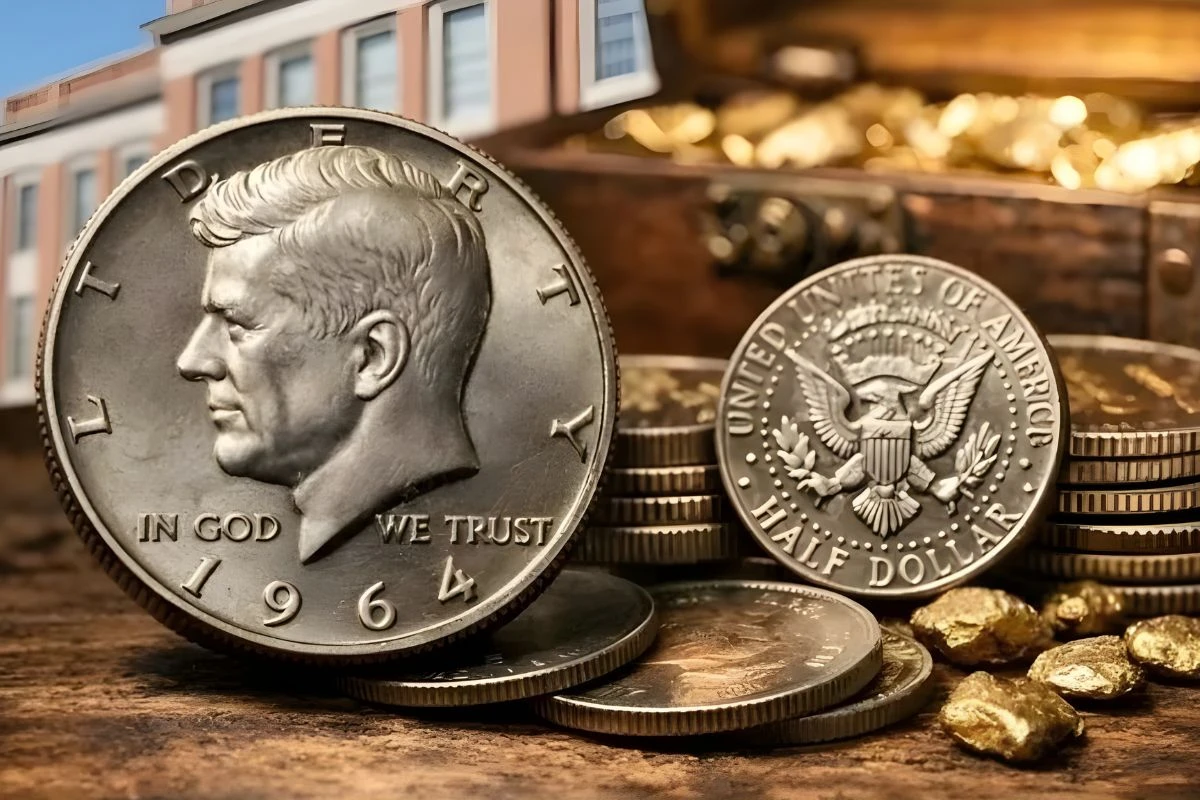
The $9.8 million rare Kennedy half dollar stands as one of the most extraordinary achievements in the history of American numismatics. This unparalleled coin has captured the attention of collectors and investors worldwide, setting records that seem almost unbelievable for a coin once valued at a mere fifty cents. The story behind this extraordinary valuation involves historical significance, minting errors, and the passionate world of coin collecting that drives prices to astronomical heights.
Historical Background and Context
Production of the Kennedy Half Dollar series began in 1964, shortly after the assassination of President John F. Kennedy in November 1963. The U.S. Mint moved quickly to create a commemorative coin in honor of the late president, and the half dollar denomination was selected for this purpose. These coins were initially minted with 90% silver content, making them valuable to collectors for reasons extending far beyond their mere numismatic appeal.
The transitional period between 1964 and 1970 witnessed several changes in the composition of the coins. While most people are familiar with the standard Kennedy half dollar, certain specific coins possess unique characteristics that elevate them to a legendary status among collectors.
Why Is It Valued in the Millions?
The $9.8 million valuation of certain specific Kennedy half-dollar coins is attributed to their exceptional rarity and condition. These coins typically feature minting errors or unusual strikes or are “proof” editions—coins that were never intended for general circulation. This combination of pristine preservation, historical significance, and extreme rarity creates the perfect scenario for fetching record-breaking prices at auction.
Some coins were struck on special ‘planchets’ (the round metal blanks used for minting), or they exhibit ‘doubled die’ errors—imperfections that occurred during the minting process. Other coins may be prototype versions or trial strikes that, through some twist of fate, escaped the Mint’s destruction protocols and found their way into private hands.

Grading and Condition Factors
Professional coin grading plays a pivotal role in determining the value of Kennedy half dollars. Organizations such as the Professional Coin Grading Service (PCGS) and the Numismatic Guaranty Corporation (NGC) assign numerical grades ranging from 1 to 70, with 70 representing the pinnacle of perfection. A coin graded MS-70 or PR-70 can command a price many times higher than a coin graded just slightly lower.
The quality of the coin’s surface, the sharpness of its strike, and the preservation of its luster—all these factors combine to determine the coin’s final grade. At the very highest echelons of the market, even minute flaws can diminish a coin’s value by hundreds of thousands of dollars.
Authentication and Certification Process
Establishing the authenticity of coins worth millions of dollars requires rigorous examination by expert numismatists. These professionals utilize advanced imaging techniques, precise weight measurements, and metallurgical analysis to verify legitimacy. The certification process can take several weeks or even months, as every minute detail must be scrutinized to prevent fraud in a market where millions of dollars are at stake.
For exceptional specimens, provenance documentation is equally critical. A clear chain of ownership—tracing the coin from the Mint through various private collections—enhances credibility and can, in fact, add value that far exceeds the coin’s intrinsic physical attributes.

Market Demand Dynamics
The market for rare coins operates differently than traditional investment markets, driven primarily by passionate collectors and institutional buyers. Kennedy half dollars hold a special place in American culture, as they are associated with a beloved president and a pivotal moment in national history. This emotional component drives demand beyond mere financial considerations.
Wealthy collectors often view these coins not merely as assets but as tangible symbols of American heritage. This perspective supports high valuations that might otherwise appear irrational by traditional investment standards.
Kennedy Half Dollar Price Comparison
| Year | Composition | Common Grade | Estimated Price Range |
|---|---|---|---|
| 1964 | 90% Silver | MS-65 | $25 – $75 |
| 1970-D | 40% Silver | MS-67 | $15,000 – $40,000 |
| 1964 SMS | 90% Silver | SP-67 | $50,000 – $150,000 |
| 1974-D | Copper-Nickel | MS-66 | $20,000 – $60,000 |
| Special Errors | Various | PR-70 | $500,000 – $9,800,000 |
Analysis from an Investment Perspective
Purchasing rare Kennedy half dollars at extremely high valuations carries significant risk alongside potential rewards. Unlike stocks or bonds, these coins do not generate income and require secure storage—preferably insured—to ensure their safety. Market liquidity is relatively low, meaning that selling quickly at full market value—even for certified coins—can prove challenging.
However, certain rare coins have demonstrated tremendous appreciation in value over the decades. The $9.8 million valuation reflects both historical performance and optimistic projections regarding future coin scarcity, as very few coins in pristine condition remain in the market today.

Maintenance and Storage Requirements
Preserving the condition of a coin worth millions of dollars necessitates professional-grade storage methods. Environmental controls—specifically precise regulation of temperature and humidity—are essential to prevent any damage to the coin. Many owners store such valuable coins in bank safe deposit boxes or in specialized numismatic storage facilities equipped with 24/7 security surveillance.
Even brief exposure to an unsuitable environment can inflict irreparable damage upon a coin, thereby significantly diminishing its value. Professional collectors never handle these coins with their bare hands; instead, they wear cotton gloves and work on padded surfaces to ensure that the coins remain free from accidental damage.
Future Market Outlook
The market for Kennedy half dollars is constantly evolving as new generations join the ranks of coin collectors. Young enthusiasts bring with them distinct perspectives and preferences, which may, over time, alter the criteria used to determine a coin’s value. Digital authentication technologies and blockchain-based provenance tracking could revolutionize the way rare coins are bought, sold, and authenticated in the coming decades.
As the 1964 mintage recedes further into history, the emotional connection associated with the era of President Kennedy may—depending on prevailing cultural trends—either deepen or gradually fade. These psychological factors will significantly influence whether the $9.8 million mark represents a market peak or merely a waypoint on the path toward even higher valuations.