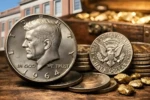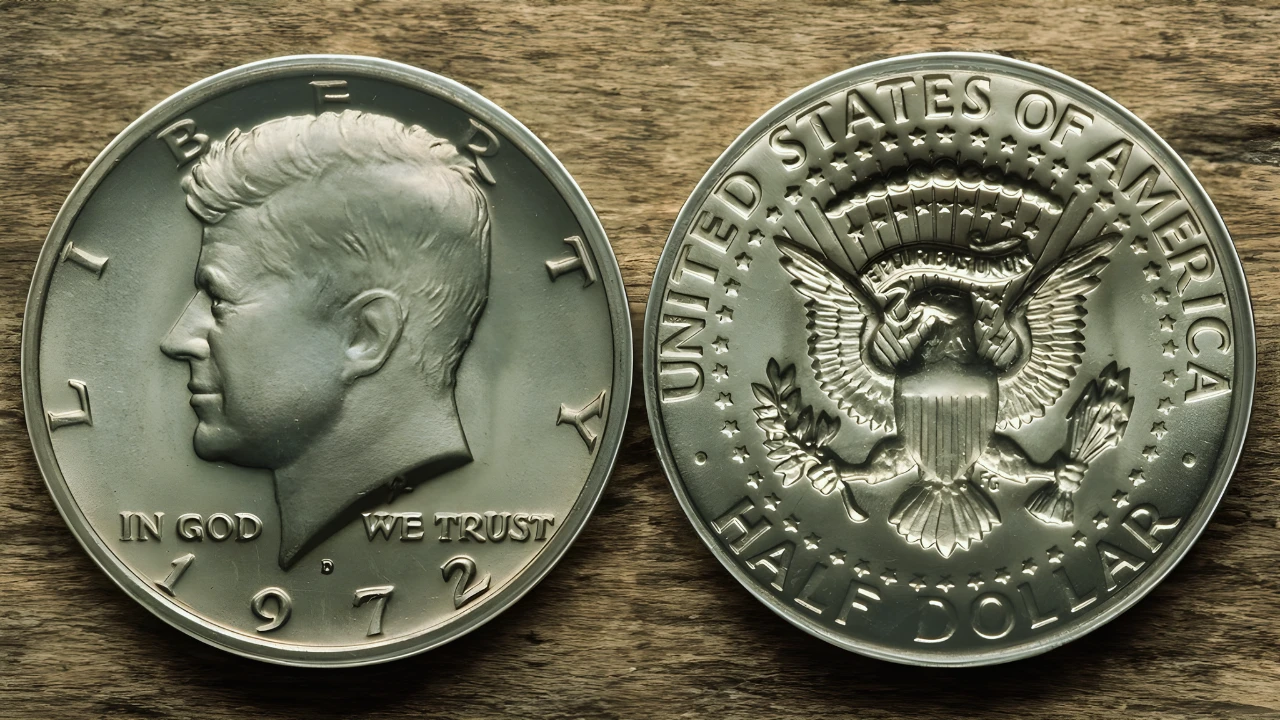
The Kennedy Half Dollar is one of the most recognizable coins in American history. First minted in 1964, this fifty-cent coin was created to honor President John F. Kennedy following his tragic assassination in November 1963. The coin soon became a symbol of national mourning and remembrance, finding a place in the hearts of millions of Americans who wished to cherish the memory of their late leader.
Historical Background Context
The United States Mint worked with unprecedented speed to produce this commemorative coin. Chief Engraver Gilroy Roberts designed the coin’s obverse (front), which featured a profile of Kennedy, while Frank Gasparro created the reverse (back), displaying the Presidential Seal. Production of the coin began just weeks after it was authorized by Congress in December 1963, making it one of the most rapidly approved and minted coin designs in American history.
When the Kennedy Half Dollar entered circulation on March 24, 1964, the public response was overwhelming. Banks reported long lines of citizens eager to obtain the new coins, and many people chose to hoard them as keepsakes rather than spend them. This immense public demand led to an immediate shortage of coins in circulation, compelling the Mint to produce millions of additional coins.
Composition Changes Over Time
The original 1964 Kennedy Half Dollar consisted of 90% silver and 10% copper, a composition consistent with previous half-dollar designs. However, rising silver prices eventually compelled the government to alter the coin’s metallic composition. From 1965 to 1970, the mint produced Kennedy Half Dollars containing 40% silver; this utilized a ‘clad’ (layered) structure, in which outer layers composed of 80% silver and 20% copper were bonded to a core of pure copper.
After 1970, silver was completely eliminated from coins produced for general circulation. Modern Kennedy Half Dollars feature a copper-nickel clad structure, consisting of outer layers of 75% copper and 25% nickel surrounding a pure copper core. This change made coin production more economical while preserving their distinctive texture and weight characteristics.

Kennedy Half Dollar Composition Timeline
| Year Range | Silver Content | Copper Content | Total Weight |
|---|---|---|---|
| 1964 | 90% | 10% | 12.5 grams |
| 1965-1970 | 40% | 60% | 11.5 grams |
| 1971-Present | 0% | 91.67% | 11.34 grams |
Collectors’ Interest Today
The Kennedy Half Dollar remains immensely popular among numismatists and general collectors alike today. The silver coins minted in 1964—particularly those in uncirculated condition or bearing specific mint marks—command high prices. Collectors value these early coins not only for their intrinsic silver content but also for their historical significance and their connection to the legacy of President Kennedy.
Proof editions and special commemorative versions garner particular attention among collectors. The San Francisco Mint has produced Proof Kennedy Half Dollars almost continuously since 1968, offering collectors coins featuring a mirror-like finish and exquisite detail. Certain years feature special finishes or anniversary editions that become instant collectibles the moment they are released.
Circulation Status Explained
Despite their continuous production, Kennedy Half Dollars are rarely encountered in everyday commerce today. Most Americans have never come across them during routine transactions, as banks typically do not order them for general circulation. While these coins remain legal tender and are produced annually, they serve primarily to cater to collectors rather than functioning as practical currency.
One reason for their absence from circulation is their size and weight relative to quarter-dollar coins. Vending machines and automated systems were never widely adapted to accept half dollars, rendering them impractical for everyday use. Furthermore, constant demand from collectors means that most half dollars that do enter circulation are quickly acquired and set aside.

Mintage Numbers Matter
Production volumes fluctuate dramatically from year to year, resulting in significant variations in the market values of Kennedy Half Dollars. In the 1964 issue, over 400 million coins were minted across two mint facilities, making the coin relatively common despite its high silver content. In subsequent years, mintage figures were often significantly lower—particularly for circulation coins produced after the 1970s.
Certain years are particularly rare and command significantly higher values. The 1970-D variety—minted exclusively in Denver—had an extremely limited production run and rarely appears in collections. Similarly, proof versions from specific years were minted in quantities of fewer than 3 million, rendering them considerably more valuable than their high-mintage counterparts.
Investment Potential Assessment
The Kennedy half dollar presents an attractive opportunity for both investors in precious metals and numismatic collectors. Coins minted prior to 1971 possess an intrinsic value derived from their silver content, which fluctuates in tandem with prevailing market prices for silver. As silver prices rise, the value of these coins appreciates proportionally, thereby offering a robust hedge against economic uncertainty.
Beyond their intrinsic metal value, coins bearing specific dates and exhibiting exceptional condition often command premium prices driven by collector demand. High-grade specimens—particularly those certified by professional grading services—frequently sell for multiples of their underlying silver value. Error coins, special-strike varieties, and those featuring a “Full Bell Line” on the reverse side can fetch extraordinary prices at auction.

Legacy and Future
Production of the Kennedy Half Dollar continues into the 21st century, albeit primarily for collectors who purchase directly from the U.S. Mint. This continued production ensures that future generations can possess a tangible piece of American history. The coin serves not merely as a medium of exchange but also as an enduring tribute to a president whose brief tenure left an indelible mark upon the nation.
As time passes, the historical significance of the Kennedy Half Dollar continues to grow even stronger. These coins connect modern Americans to a pivotal moment in history, serving as tangible testaments to both tragedy and resilience. Whether valued for their silver content, numismatic rarity, or historical significance, the Kennedy Half Dollar remains an enduring American treasure.